Projects

Innovating for a Brighter Tomorrow

Blade Design

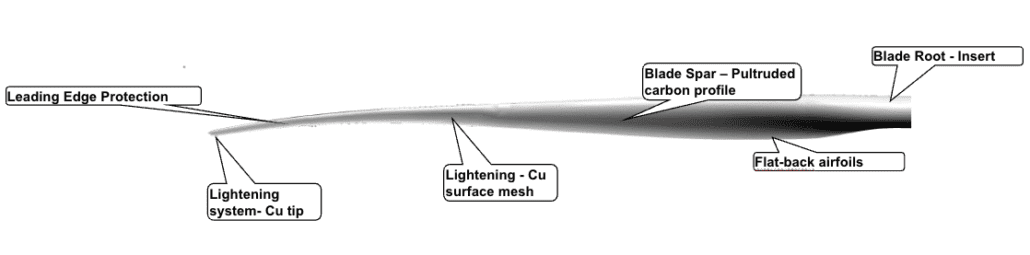
Blade Design – Blade Structure

  • Approved by DNV/GL according to DNVGL-ST-0376
  • Blade tested according to DNV/GL regulation.
    – Pre-Static Test, fatigue (Flap, edge), post static
  • Tested for torsion for aeroelastic data
  • Lightening test – IEC 61400-24
  • Leading edge protection system (Polytech solution) applied
  • Pultruded Carbon fibers for blade spar design

Blade Design Track Record

Onshore:

  • V16 – 2 bladed down wind

Offshore:

  • V20 – 13.4MW-252 – 3 Bladed Wind Turbine
  • V20 – 16.2MW – 266 – 3 Bladed Wind Turbine
  • V22 – 20MW – 300

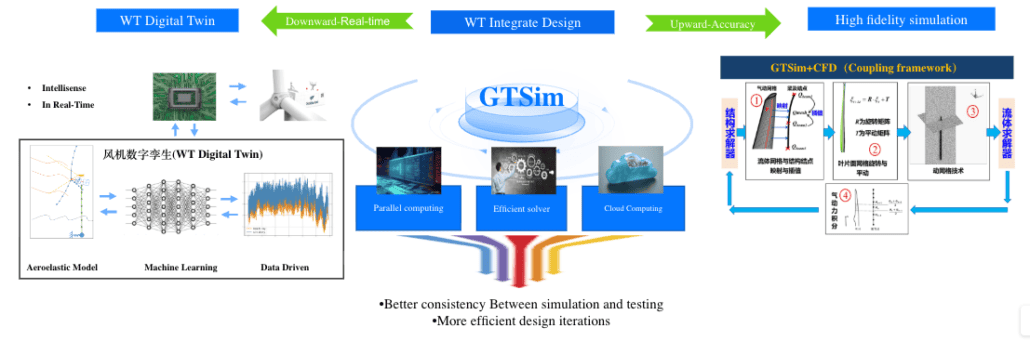
GTSim Application

GTSim Application in Different Scenarios

  • Simulation-driven
  • China’s first internationally certified, fully indigenous wind turbine simulation software
  • Opens the commercial “black box”, breaking long-standing industry barriers
  • Validated against extensive field & laboratory test data to ensure high accuracy
  • Optimized for blade aerodynamics, drivetrain dynamics & overall turbine stability—enabling next-generation concepts such as:
    – large-diameter rotors
    – flexible/adaptive blades
    – ultra-tall towers
  • Integrates multibody dynamics, aerodynamics, hydrodynamics, & control systems into a unified simulation platform
  • Supports full-process & full-condition turbine simulation, from concept design to operational prediction
  • Features a highly modular architecture for rapid algorithm development, flexible configuration & scalable application across diverse turbine technologies

Shaping the future of clean energy solutions

Floating Wind

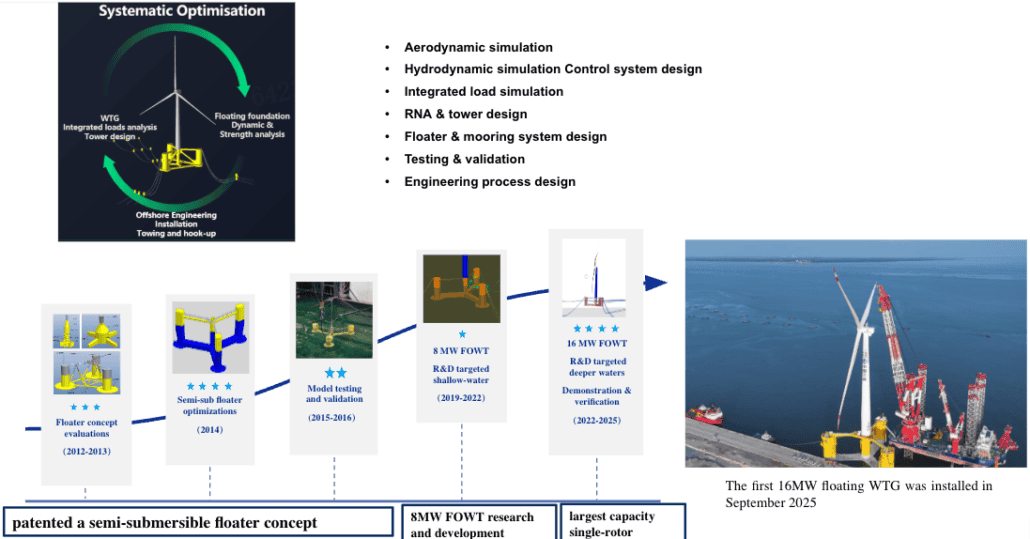
An Innovative Product Based on Over 10 Years of Technical Accumulations

  • Aerodynamic simulation
  • Hydrodynamic simulation Control system design
  • Integrated load simulation
  • RNA & tower design
  • Floater & mooring system design
  • Testing & validation
  • Engineering process design

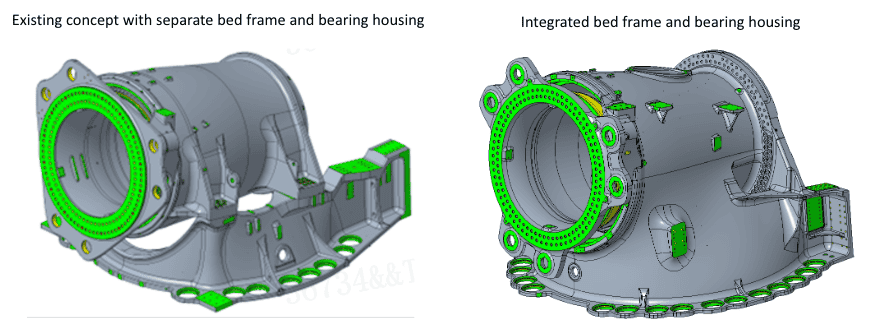
V22 Integrated bed frame

Integrated bed frame

The trend is that turbines and thus turbine components are larger. Thus, efforts have been made to reduce mass for the largest nacelle components, in this case bed frame and main bearing housing.
The known solution is having a separate bearing housing with 4 feet attached to the separate bed frame. This solution is widely used for decades, but more problematic when the turbines get larger. Especially the bolted connections are problematic, but also the deflection during loading disturbs the main bearing interfaces, which may decrease the bearing lifetime.
By playing with stress flow and integrating main bearing housing and bed frame it has been achieved to reduce the total mass of main bearing housing and bed frame by 25%
The main bearing interfaces have been optimized using the optimized structure. By that an improvement of the same front bearing lifetime is improved by 30%

Get in touch with us

Have a question or request? Reach out to us through the form below, and we’ll be happy to assist you!